Archangel Michael by Guido Reni: A Comprehensive Analysis
Guido Reni’s 1636 Archangel Michael, housed in Rome’s Santa Maria della Concezione, exemplifies Baroque artistry and religious devotion, sparking ongoing critical discussion.
Historical Context of Guido Reni
Guido Reni (1575-1642) flourished during the late Mannerist and early Baroque periods in Italy, a time of significant religious and artistic upheaval. Born in Bologna, he initially trained within the School of Bologna, absorbing classical influences and a refined academic style. Reni’s career unfolded against the backdrop of the Counter-Reformation, where the Catholic Church actively employed art to reaffirm its doctrines and inspire piety.
Rome, during Reni’s active period, was a vibrant center for artistic patronage, attracting artists from across Europe. The Cappuccini order, commissioning the Archangel Michael for Santa Maria della Concezione, represented a key component of this religious revival. Reni’s work often reflected the spiritual climate, aiming for a compelling blend of classical beauty and emotional intensity, a characteristic that distinguished him from more dramatically Baroque contemporaries.
Reni’s Artistic Style and Influences
Guido Reni’s artistic style is characterized by a graceful elegance, refined draftsmanship, and a masterful use of light and shadow – a synthesis of classical ideals and emerging Baroque sensibilities. He drew heavily from the works of Raphael and Correggio, evident in his idealized figures and harmonious compositions. However, Reni wasn’t solely bound by tradition; he incorporated a subtle emotionalism, moving beyond purely academic forms.
His paintings often feature a cool, silvery palette and a delicate modeling of forms, creating an ethereal quality. Reni’s approach to religious subjects, like the Archangel Michael, aimed to inspire devotion through beauty and spiritual contemplation. He skillfully balanced dramatic action with a sense of serene composure, a hallmark of his unique artistic vision.
The Baroque Period and its Impact on Reni’s Work
Guido Reni operated during the height of the Baroque period, a time of dramatic artistic expression and religious fervor. While embracing certain Baroque elements – dynamic compositions and heightened emotionality – Reni maintained a classical restraint, distinguishing his work from more overtly theatrical Baroque styles. The Counter-Reformation heavily influenced artistic production, demanding works that reinforced Catholic doctrine and inspired piety.
Reni’s Archangel Michael reflects this context through its powerful depiction of divine intervention and the triumph of good over evil. The Baroque emphasis on movement and grandeur is present, yet tempered by Reni’s characteristic elegance and clarity. He utilized dramatic lighting to focus attention on the angel, a technique common in Baroque painting, but avoided excessive ornamentation.
The Iconography of Archangel Michael
Archangel Michael is traditionally depicted as a warrior angel, often shown defeating Satan, symbolized by a dragon, wielding a sword and scales of justice.
Traditional Representations of Archangel Michael
Throughout art history, Archangel Michael has consistently been portrayed as a powerful, celestial warrior, embodying divine strength and righteous judgment. Early depictions, often found in Byzantine mosaics and medieval illuminated manuscripts, showcase him as a stern, imposing figure clad in armor, frequently trampling upon a defeated serpent or dragon – representing the triumph over evil.
He is commonly shown with outstretched wings, symbolizing his heavenly nature and swift intervention. The iconography frequently includes a spear or sword, signifying his role as a defender of faith and a vanquisher of darkness. Later Renaissance interpretations, while maintaining these core elements, began to emphasize Michael’s grace and beauty alongside his martial prowess.
These traditional representations established a visual language that artists like Guido Reni would later build upon, adapting and refining the established symbolism to suit their artistic styles and the prevailing theological currents of their time.
Symbolism Associated with Archangel Michael (Sword, Scales, Dragon)
The iconography surrounding Archangel Michael is rich with symbolic meaning. The sword, prominently featured, represents divine justice, authority, and Michael’s role as a warrior against evil forces. It signifies the power to vanquish darkness and uphold righteousness. The scales, less common but equally significant, symbolize the weighing of souls during the Last Judgment, highlighting Michael’s role as a judge.
Perhaps the most recognizable symbol is the dragon, universally understood as representing Satan or the forces of evil. Michael’s victory over the dragon embodies the triumph of good over evil, a central tenet of Christian belief.
In Reni’s interpretation, these symbols are subtly integrated, emphasizing not just Michael’s power, but also his contemplative nature and divine grace, offering a nuanced portrayal of these traditional emblems.
Michael as a Defender of Faith
Throughout Christian tradition, Archangel Michael is venerated as the preeminent defender of faith, a celestial warrior battling against the forces of darkness and protecting the righteous. This role stems from biblical accounts, notably his leadership of the heavenly host against Lucifer and his rebellious angels in the Book of Revelation. He embodies divine courage and unwavering loyalty to God.
Reni’s depiction subtly reinforces this protective aspect. While not overtly engaged in combat, the angel’s poised stance and resolute gaze suggest readiness and strength. The painting evokes a sense of spiritual guardianship, reassuring viewers of divine protection.
The context of the Counter-Reformation further emphasizes Michael’s role as a bulwark against heresy, making Reni’s portrayal particularly resonant for its time.
The Painting: Archangel Michael by Guido Reni (Santa Maria della Concezione)
Reni’s Archangel Michael at Santa Maria della Concezione presents a serene yet powerful figure, showcasing masterful Baroque techniques and spiritual depth.
Description of the Composition
Guido Reni’s Archangel Michael depicts the celestial warrior in a moment of poised grace rather than violent action. The angel descends, not aggressively, but with a controlled, almost melancholic dignity. He isn’t actively battling the dragon, which lies defeated beneath his feet, but rather appears to have just overcome it.
The composition is strikingly vertical, emphasizing Michael’s ethereal presence. His flowing draperies contribute to this upward movement, creating a sense of lightness and divine intervention. The angel’s gaze is directed downwards, not with triumph, but with a contemplative solemnity. The subdued palette and soft lighting further enhance the painting’s introspective mood. The placement within the church altar suggests a focus on spiritual contemplation and reverence, rather than a dramatic narrative.
Analysis of Color Palette and Light
Guido Reni’s Archangel Michael employs a restrained color palette dominated by cool tones – blues, grays, and whites – creating a sense of ethereal serenity. Warm hues are subtly introduced, primarily in the flesh tones and the defeated dragon, providing a delicate contrast. This limited palette contributes to the painting’s overall mood of contemplative grace, avoiding dramatic intensity.
The lighting is soft and diffused, characteristic of Reni’s style, gently modeling the angel’s form and draperies. Light doesn’t harshly illuminate, but rather seems to emanate from within the figure, enhancing his spiritual quality. This chiaroscuro effect, though subtle, adds depth and volume. The interplay of light and shadow emphasizes the angel’s pose and expression, drawing the viewer’s eye to his melancholic gaze.
The Angel’s Pose and Expression
Reni’s Archangel Michael is depicted in a moment of quiet contemplation, a departure from the more dynamic, triumphant portrayals common in Baroque art. His pose is graceful yet subdued; he isn’t actively vanquishing the dragon, but rather stands over it with a weary resignation. This creates a sense of pathos and introspection.
The angel’s expression is particularly striking – a melancholic gaze directed downwards, conveying a sense of sorrow and perhaps even pity. This nuanced emotion is central to Reni’s interpretation, suggesting a complex understanding of divine power and its burdens. The slight downturn of his lips and the gentle furrow of his brow contribute to this feeling of profound sadness, making him a uniquely human and relatable figure.
Technical Aspects of the Painting
Reni skillfully employed glazing and delicate brushwork, utilizing canvas and pigments to achieve luminous effects in Archangel Michael, showcasing Baroque mastery.
Reni’s Painting Techniques (Brushwork, Glazing)
Guido Reni’s technique in Archangel Michael is characterized by a refined and delicate approach, departing from the bolder, more impasto-driven styles of some Baroque contemporaries. He masterfully utilized glazing – the application of translucent paint layers over dried underpainting – to build up luminosity and depth. This layering created a subtle, almost ethereal quality, particularly noticeable in the angel’s flesh tones and the shimmering fabric of his drapery.
Reni’s brushwork is remarkably smooth and controlled, minimizing visible strokes. He prioritized a polished surface, achieving a sense of idealization and grace. While not entirely absent, impasto is used sparingly, primarily to highlight specific areas like the folds of the garment or the texture of the wings. This meticulous approach reflects Reni’s academic training and his pursuit of classical ideals of beauty. The glazing technique allowed for nuanced color transitions and a captivating play of light and shadow, enhancing the painting’s dramatic impact.
Materials Used (Canvas, Pigments)
Guido Reni’s Archangel Michael was executed on a canvas support, a common practice during the Baroque period, offering flexibility in size and portability compared to traditional wooden panels. The canvas was likely prepared with a ground layer – typically gesso – to create a smooth, receptive surface for the paint. Reni employed a palette of pigments characteristic of 17th-century Italian painting.
These likely included lead white for highlights and luminosity, ochres and umbers for earth tones, and various reds and blues derived from mineral sources. Azurite provided vibrant blues, while vermilion contributed rich reds. The precise composition remains subject to ongoing scientific analysis, but the pigments were skillfully blended to achieve subtle gradations and a refined color harmony. The quality of materials reflects the commission’s importance and Reni’s commitment to artistic excellence.
Size and Dimensions of the Artwork
Guido Reni’s Archangel Michael at Santa Maria della Concezione dei Cappuccini is a substantial work, commanding attention through its impressive scale. The painting measures approximately 288 cm in height and 165 cm in width (roughly 9 feet 5 inches x 5 feet 5 inches). These dimensions contribute significantly to the artwork’s impact, enveloping the viewer in the scene and emphasizing the Archangel’s powerful presence.
The large format was typical for altarpieces during the Baroque era, designed to dominate the sacred space and inspire reverence. The canvas size allowed Reni to depict the figure with considerable detail and dramatic flair, showcasing his mastery of anatomy and composition. Its substantial size reinforces the painting’s role as a focal point within the church’s interior.
Location and History of the Painting
Guido Reni’s Archangel Michael resides within Rome’s Santa Maria della Concezione dei Cappuccini church, originally commissioned for its altar space in 1636.
Santa Maria della Concezione dei Cappuccini: A Brief Overview
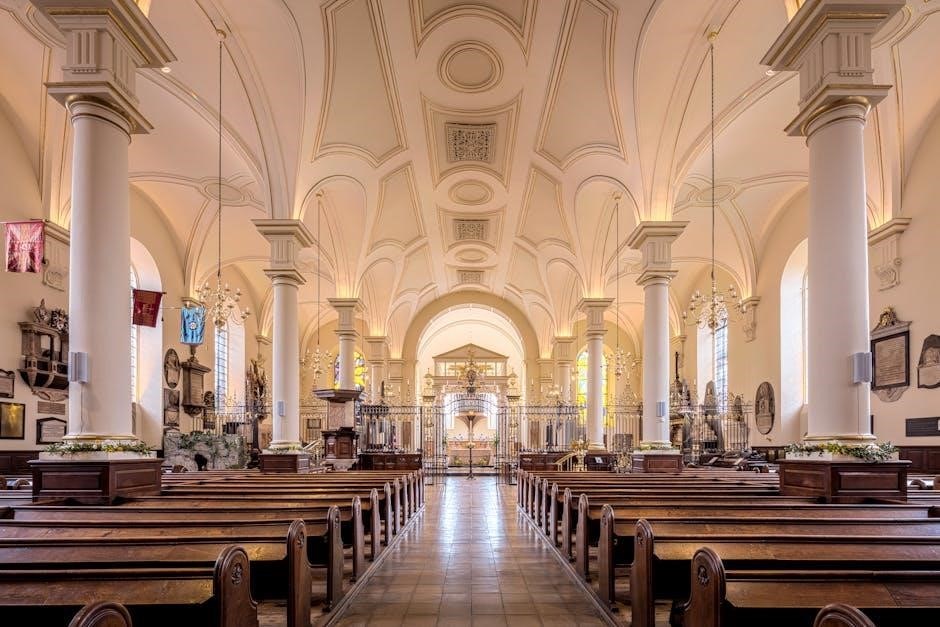
Santa Maria della Concezione dei Cappuccini, a significant Roman church, is renowned for its unique and somewhat macabre crypt decorated with the bones of Capuchin friars. Founded in the 16th century, the church serves as the principal church of the Capuchin Order. Its construction and subsequent embellishments reflect the Counter-Reformation’s emphasis on religious art and devotion.
The church’s interior showcases a blend of Baroque styles, intended to inspire awe and piety in visitors. It became a prominent site for artistic patronage, attracting notable artists like Guido Reni, who contributed the celebrated Archangel Michael. The church’s location and its association with the Capuchin Order, known for their austerity and charitable works, contributed to its spiritual and cultural importance within Rome.
Today, it continues to draw pilgrims and art enthusiasts alike, offering a compelling glimpse into both religious history and artistic achievement.
The Painting’s Commission and Original Placement
Guido Reni’s Archangel Michael was specifically commissioned for the altar of Santa Maria della Concezione dei Cappuccini in Rome around 1636. This placement was deliberate, intended to visually reinforce the church’s dedication and the Capuchin Order’s spiritual mission. The altar served as a focal point for worship, and the painting’s imposing depiction of the Archangel was meant to inspire reverence and faith among worshippers.
The commission likely came from a patron associated with the Capuchin Order, reflecting the church’s ongoing efforts to adorn its interior with significant artworks. Its original location within the church’s altar area ensured maximum visibility and impact, aligning with the Baroque period’s emphasis on dramatic religious imagery.
The painting’s placement underscored its role as a powerful symbol of divine protection and spiritual authority.
Conservation and Restoration Efforts
Details regarding extensive conservation and restoration efforts specifically applied to Guido Reni’s Archangel Michael at Santa Maria della Concezione dei Cappuccini are currently limited in readily available public documentation. However, given the painting’s age and exposure within a church environment, periodic maintenance would have been essential.
Typical conservation treatments for Baroque paintings include cleaning to remove surface dirt and grime, consolidation of flaking paint layers, and retouching to address areas of loss or damage. Assessments of the canvas support and frame would also be crucial.
Any interventions would aim to stabilize the artwork and preserve its original aesthetic qualities, respecting Reni’s artistic intent while ensuring its longevity for future generations.
Critical Reception and Interpretation
Reni’s Archangel Michael garnered early praise for its dramatic composition and spiritual intensity, continuing to inspire modern art historical analysis and debate.
Early Reviews and Contemporary Reactions
Contemporary reactions to Guido Reni’s Archangel Michael were overwhelmingly positive, establishing his reputation as a leading Baroque painter. The painting, completed around 1636 for the church of Santa Maria della Concezione dei Cappuccini in Rome, immediately resonated with viewers due to its powerful depiction of divine intervention and spiritual triumph.
Early accounts highlight the artwork’s ability to evoke a sense of awe and religious fervor. Critics praised Reni’s masterful handling of light and shadow, creating a dramatic and emotionally charged atmosphere. The angel’s imposing figure and determined expression were seen as embodying strength and righteous authority. The work’s placement within the church further amplified its impact, serving as a focal point for devotion and contemplation.
These initial responses solidified Reni’s position within the Roman art scene and contributed to the widespread demand for his religious paintings throughout the 17th century.
Modern Art Historical Analysis
Modern art historical analysis views Guido Reni’s Archangel Michael through the lens of Baroque theatricality and Counter-Reformation ideals. Scholars emphasize the painting’s deliberate construction of a visually arresting and emotionally engaging experience, aligning with the Church’s efforts to reaffirm faith.
The composition is analyzed as a carefully orchestrated display of power and grace, reflecting Reni’s academic training and his synthesis of classical and Renaissance influences. The angel’s pose, often compared to depictions of victorious Roman emperors, underscores the theme of divine authority.
Furthermore, analysis considers the painting’s relationship to broader cultural trends, including the rise of religious drama and the increasing emphasis on spectacle. The work is seen not merely as a devotional image, but as a sophisticated artistic statement reflecting the complex religious and political climate of 17th-century Rome.
The Painting’s Place within Reni’s Oeuvre
Within Guido Reni’s extensive oeuvre, the Archangel Michael at Santa Maria della Concezione represents a culmination of his mature style. Painted around 1636, it showcases his mastery of idealized form, dramatic lighting, and elegant composition – hallmarks of his later work.
Compared to his earlier, more dynamic and emotionally charged paintings, this Michael exhibits a refined classicism and a sense of serene power. It demonstrates Reni’s shift towards a more contemplative and spiritual aesthetic, reflecting his deepening religious convictions.
The painting also stands as a testament to Reni’s prolific output and his enduring popularity with Roman patrons. It exemplifies his ability to synthesize diverse artistic influences into a uniquely personal and compelling visual language, solidifying his reputation as a leading Baroque master.
Comparison with Other Depictions of Archangel Michael
Reni’s interpretation diverges from earlier Renaissance versions, prioritizing graceful elegance over forceful dynamism, and uniquely contrasts with other Baroque artists’ portrayals.
Reni’s Michael vs. Earlier Renaissance Versions
Guido Reni’s Archangel Michael represents a significant departure from earlier Renaissance depictions, notably those by artists like Fra Angelico or Andrea del Castagno. Renaissance Michaels often emphasized a robust, muscular physique and a more overtly aggressive stance, reflecting a period focused on humanistic ideals and physical power. These earlier versions frequently portrayed Michael actively engaged in combat with the dragon, highlighting a dramatic, forceful victory.
Reni, however, presents a more ethereal and graceful figure. His Michael is less about brute strength and more about divine authority and serene power. The angel’s pose is less confrontational, and the overall composition prioritizes elegance and refined beauty. This shift reflects the evolving artistic sensibilities of the Baroque period, moving away from the High Renaissance’s emphasis on anatomical accuracy and dramatic action towards a more emotionally resonant and visually captivating style. Reni’s Michael embodies a spiritual triumph rather than a physical one.
Comparison with Baroque Depictions by Other Artists
Compared to other Baroque interpretations of Archangel Michael, such as those by Peter Paul Rubens or José de Ribera, Guido Reni’s version occupies a unique stylistic space. Rubens’ Michaels are typically dynamic and intensely dramatic, filled with swirling movement and vibrant color, emphasizing the angel’s forceful intervention. Ribera, known for his tenebrism, presents a grittier, more realistic portrayal, focusing on the physicality of the battle and the angel’s determined struggle.
Reni’s approach diverges by prioritizing grace and idealized beauty. While still embodying Baroque characteristics like dramatic lighting and emotional intensity, his Michael lacks the overt theatricality of Rubens or the stark realism of Ribera. Reni’s angel feels more distant, more divine, and less directly involved in earthly conflict. This refined aesthetic distinguishes his work, showcasing a more contemplative and spiritually focused interpretation of the iconic figure.
Unique Characteristics of Reni’s Interpretation
Reni’s Archangel Michael distinguishes itself through a masterful blend of Classical idealism and Baroque drama. Unlike many contemporaries who emphasized the violent struggle against the dragon, Reni presents a poised, almost serene Michael, seemingly above the fray. This isn’t a depiction of brute force, but of divine authority and effortless power.
The angel’s elegant pose, delicate features, and the soft modeling of his form contribute to this unique aesthetic. Reni’s use of light isn’t harsh or theatrical, but rather a gentle illumination that enhances the figure’s ethereal quality. The composition, while dynamic, feels controlled and balanced, lacking the chaotic energy often found in Baroque works. This refined approach elevates the painting beyond a simple narrative, transforming it into a meditation on faith and divine grace.
The Painting’s Influence on Subsequent Art
Reni’s Archangel Michael impacted later artists with its refined elegance, influencing religious depictions and inspiring reproductions across various cultural mediums and time periods.
Impact on Later Artists
Guido Reni’s masterful depiction of Archangel Michael resonated deeply within the artistic community, leaving a discernible mark on subsequent generations of painters. The painting’s graceful composition, ethereal quality, and emotionally charged portrayal of the archangel served as a powerful model for religious art. Artists following Reni frequently referenced his interpretation, adopting elements of his style – particularly the delicate modeling of forms and the dramatic use of light and shadow – in their own depictions of celestial beings.
While direct copies were less common, the influence manifested in a broader embrace of Reni’s aesthetic principles. The painting’s success contributed to a continuing trend of portraying divine figures with a heightened sense of idealism and spiritual intensity, shaping the trajectory of Baroque and post-Baroque religious painting. The work’s enduring appeal also ensured its continued study and admiration within art academies, further solidifying its legacy.
Use in Popular Culture and Reproductions
Guido Reni’s Archangel Michael, owing to its iconic status and striking imagery, has transcended the confines of art history to permeate popular culture. High-quality reproductions – prints, posters, and digital images – are widely available, adorning homes, offices, and religious spaces globally; The painting’s visual power lends itself well to devotional imagery, frequently appearing in Catholic publications and artwork.
Furthermore, the image has been adapted and reinterpreted in various media, including illustrations, graphic novels, and even video games, often symbolizing strength, divine intervention, and the triumph of good over evil. While specific instances of direct use in film or television are less prevalent, the painting’s aesthetic has undoubtedly influenced visual representations of angels and heroic figures. Its enduring legacy ensures continued reproduction and adaptation across diverse platforms.
The Painting’s Enduring Legacy
Guido Reni’s Archangel Michael continues to captivate audiences centuries after its creation, solidifying its place as a cornerstone of Baroque art and a powerful religious icon. The painting’s enduring appeal stems from Reni’s masterful depiction of divine power, grace, and the dramatic tension inherent in the subject matter. Its influence on subsequent artists is demonstrable, inspiring interpretations of Archangel Michael and influencing stylistic approaches to religious painting.
Beyond the art world, the image resonates with broader cultural themes of faith, protection, and the battle against darkness. The painting’s continued reproduction and presence in popular culture attest to its timeless quality and universal message, ensuring its legacy for generations to come, remaining a symbol of spiritual fortitude.